Islamic Geometric Rosette Mandala: A Guide to Balanced Design
The first time you truly study an Islamic geometric rosette mandala, it’s not just a pattern you see; it’s a story of mathematics, spirituality, and artistic devotion unfolding in a perfect circle. These designs, built from interlocking stars, polygons, and precise lines, are more than just decorative elements. They represent a deep cultural heritage where complexity emerges from simple, repeatable rules. The result is a visual language of order, harmony, and infinite expansion that feels both ancient and strikingly modern. For a designer or creator, this isn't just another asset; it's a bridge to a rich artistic tradition that can lend any project a sense of profound balance and timeless elegance.
The Anatomy of a Geometric Rosette
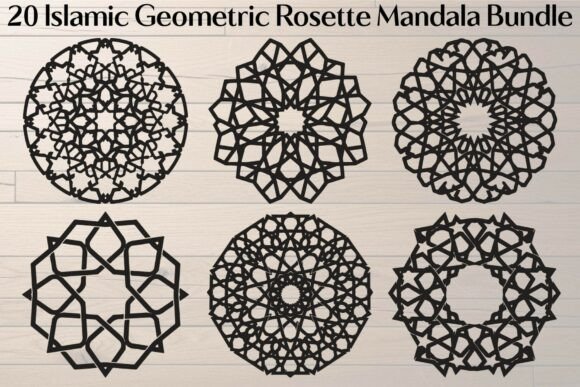
Understanding the components of an Islamic geometric rosette mandala is key to using it effectively. At its heart is a central point, often a star or a circle, from which all other elements radiate. This radial symmetry is crucial, creating a focal point that naturally draws the eye. From there, tessellating shapes—typically squares, triangles, and hexagons—lock together with mathematical precision, forming intricate, repeating motifs. The negative space is just as important as the lines themselves, creating secondary patterns that dance in the viewer's perception.
This structure isn't arbitrary. It's a visual representation of concepts like unity, order, and the interconnectedness of all things. The personality of a rosette mandala is one of meticulous craftsmanship and serene complexity. It conveys a sense of stability and wisdom, making it a powerful tool for projects that aim to communicate heritage, authenticity, or a calm, structured aesthetic. Unlike a bold, expressive script font, which might convey personal flair, the geometric rosette speaks of universal truths and enduring principles.
Integrating Islamic Patterns into Modern Projects
The true versatility of a high-quality Islamic Geometric Rosette Mandala bundle becomes apparent when you consider its applications. These designs are not confined to niche cultural projects; their clean, vector-based lines make them adaptable design assets for a wide range of creative fields. Think of them as a sophisticated display font for your visual hierarchy—they command attention and set a specific tone without saying a word.
In brand identity and logo design, a rosette mandala can serve as a powerful emblem for businesses in architecture, luxury goods, wellness, or any field wanting to project precision, tradition, and quality. Paired with a clean sans serif font or a refined serif font, the pattern creates a striking contrast between ornate detail and modern simplicity. For packaging design, these motifs can elevate a product, suggesting artisanal care and premium quality. The symmetrical nature of the mandala also makes it inherently balanced, which is a key principle in professional editorial design and layout composition.
For digital creators, the applications are equally broad. These patterns make for stunning social media graphics, website backgrounds, or animated elements in digital ads. In print, they excel as wall art, decorative panels, or intricate details on wedding invitations and stationery. For crafters and makers, the vector precision is a game-changer. The designs are optimized for laser cutting, engraving, vinyl work, and Cricut projects, allowing you to create physical objects—like wooden signs, leather goods, or custom stencils—with flawless, intricate detail.
Practical Guidance for Selection and Use
Choosing the right asset from a bundle requires a designer's critical eye. Start by evaluating the visual weight and complexity of the rosette. A densely packed, intricate pattern will dominate a composition and works best as a central, standalone element. A simpler, more open rosette can function as a subtle background texture or a repeated pattern. Always consider the visual hierarchy of your project: the mandala should support your message, not overwhelm it.
Next, consider font pairing and stylistic harmony. The geometric precision of the mandala pairs exceptionally well with typefaces that have clean lines and clear structures. A modern sans serif font like Helvetica or Futura creates a contemporary, minimalist look. A classic serif font like Garamond can bridge the historical and modern, adding a layer of sophistication. Avoid pairing it with highly ornate script or handwritten fonts, as the competing details can create visual clutter and reduce readability.
Finally, always review the technical specifications. A professional bundle should provide the designs in multiple formats (like SVG, PNG, DXF) to ensure compatibility with various software and machines. Check the licensing terms carefully, especially if you plan to use the designs for commercial products or client work. This due diligence ensures the asset you choose not only looks beautiful but also functions seamlessly within your workflow, protecting your project and your business. By thoughtfully integrating an Islamic geometric rosette mandala, you're not just adding a pretty pattern; you're embedding a piece of mathematical and artistic legacy into your work, creating something with depth, balance, and enduring appeal.