Victorian Christmas Patterns: Vintage Charm for Modern Designers
When you work with design assets that carry a strong historical weight, you aren't just adding decoration; you are adding a layer of storytelling to your project. The "Seamless Paper: Victorian Christmas" collection is one of those assets that immediately evokes a specific emotion. It isn't just about red and green; it’s about the intricate, ornate aesthetic of the late 19th century. As a designer or brand strategist, you know that texture and background often set the stage for the entire user experience. This collection offers a distinct personality—rich, detailed, and nostalgic—making it a powerful tool for anyone looking to create high-end, vintage-inspired visuals.
The Anatomy of a Victorian Aesthetic
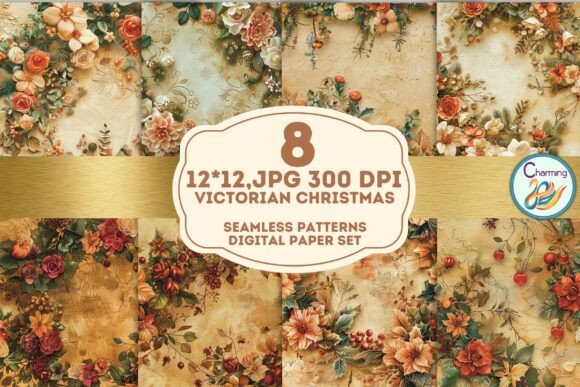
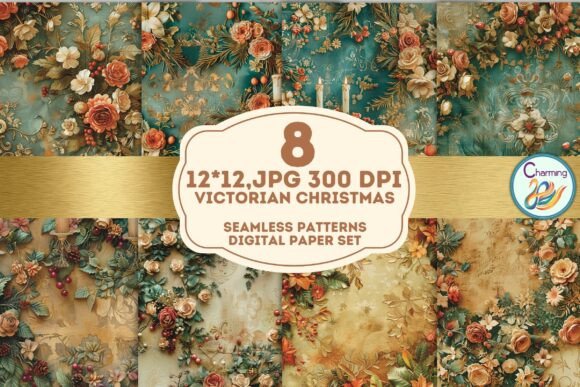
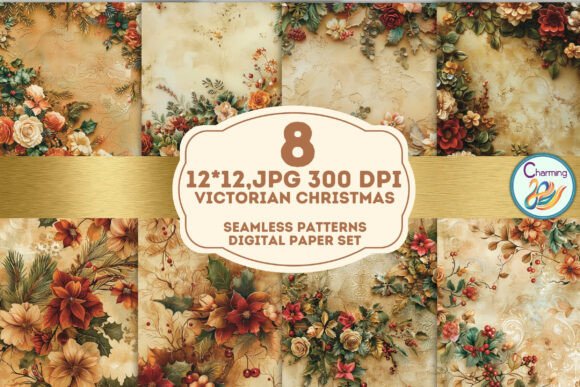
To use this set effectively, you need to understand the visual language it speaks. Victorian design is characterized by its maximalism. Unlike modern typography and minimal web design, which favor negative space, the Victorian style embraces complexity. This specific set, featuring 8 JPG patterns in high-resolution 3600×3600 pixels (300 DPI, CMYK), is built for serious production work. The seamless nature of the files means you can tile them endlessly without visible breaks, which is crucial for large-scale applications like fabric printing or wrapping paper.
The "Vintage Victorian Christmas" style typically features deep, moody backgrounds overlaid with intricate filigree, holly, and classic motifs. It functions much like a premium serif font—it demands respect and attention. If you are building a brand identity for a boutique hotel, a heritage bakery, or a high-end stationery line, these patterns act as a visual anchor. They tell your audience that you value tradition, craftsmanship, and detail. However, because these patterns are visually dense, they require a thoughtful approach to readability and hierarchy.
Strategic Applications: From Packaging to Digital Screens
The versatility of this collection is surprisingly broad, provided you understand the context of the medium. Because the files are set to 300 DPI in CMYK color mode, they are print-ready out of the box. This removes the headache of color conversion for professional printers, making them ideal for commercial projects like restaurant menu design, book covers, and greeting cards.
Here is how you can leverage these assets across different sectors:
- Physical Products & Packaging: The seamless texture is perfect for wrapping paper, tote bags, and phone cases. The high resolution ensures that when the pattern is scaled up for a tumbler or a mug, the lines remain crisp and do not pixelate. For small business owners, this allows for the creation of luxury product packaging without the cost of commissioning custom illustrations.
- Editorial & Print Design: In editorial design, a pattern like this works best as a border, a header background, or a sidebar texture. It pairs exceptionally well with clean sans-serif fonts. Imagine a magazine spread with a heavy, textured Victorian border framing a modern, high-contrast photo. The contrast creates visual tension that grabs the reader's eye.
- Digital & Social Media: While the aesthetic is vintage, the application can be modern. Content creators can use these backgrounds for "quote of the day" posts or holiday sale announcements on Instagram. The intricate details stop the scroll. However, for web design, use these sparingly. A full-screen seamless pattern on a website can be overwhelming and slow down load times. Instead, use it for a hero image overlay or a footer background to add depth without cluttering the user interface.
Mastering Font Pairings and Visual Hierarchy
One of the biggest challenges when using a strong background asset like the Seamless Paper: Victorian Christmas is ensuring your typography remains legible. This is where the choice of typeface becomes critical. You cannot simply slap a handwritten font or a complex script font over an intricate Victorian pattern; the result will be a visual mess where the text disappears into the noise.
The most effective strategy is contrast. If the background is "busy" and textured, your typography needs to be clean and structured. Consider pairing these patterns with:
- Geometric Sans-Serif Fonts: A modern, clean sans-serif font cuts through the ornate nature of the Victorian design. It provides a contemporary anchor that keeps the design from feeling too dated or costumey.
- Bold Slab Serifs: If you want to maintain a vintage vibe but need high readability, a sturdy slab serif works well. The thick strokes of the letters stand up against the detailed background patterns.
- Monogram Styles: Victorian aesthetics lend themselves beautifully to monogram logo design. A single, ornate letter set against this seamless paper creates an immediate sense of establishment and prestige.
When designing wedding invitations or art prints, consider using a "knockout" effect where you place a solid shape (like a cream or white rectangle) over the pattern and place your text on top of that solid shape. This preserves the beauty of the Victorian paper while ensuring the message is instantly readable.
Evaluating Project Fit and Licensing
Before integrating these assets into your workflow, it is essential to evaluate the fit for your specific audience. The Victorian Christmas style resonates strongly with audiences who appreciate nostalgia, tradition, and luxury. It is a fantastic choice for seasonal marketing—think Thanksgiving and Christmas home decoration ideas—but it can also work year-round for brands that trade on "classic" values.
However, if your brand identity is built on minimalism, tech-forward innovation, or brutalist web design, this collection might clash with your existing visual language. Design is about cohesion; introducing a highly stylized vintage element into a sterile, modern environment can confuse your audience rather than engage them.
Finally, always review the licensing of your digital papers. Since this set is high-resolution and versatile, it is likely intended for both personal and commercial use. This is vital for entrepreneurs and freelancers. You want to ensure that you have the rights to print these patterns on items for resale, such as t-shirts, stickers, or graphics for websites. Using high-quality, legally cleared design assets protects your business and ensures that your final product—whether it is a digital scrapbook or a physical poster—looks professional and polished.